Understanding The Darkest Night of the Soul
There comes a moment when everything you thought you knew about yourself, about life, about God or the universe stops making sense. The ground opens beneath you, and no amount of willpower, prayer, or positive thinking fills the void. If you are in this place right now, you are not broken. You may be entering what mystics and seekers have called the darkest night of the soul for over four hundred years.
This article is your companion through that darkness. It explores what the dark night of the soul actually is, what triggers it, how it differs from clinical depression, and what practical steps can help you survive it-and eventually emerge transformed.
What Is the Dark Night of the Soul?
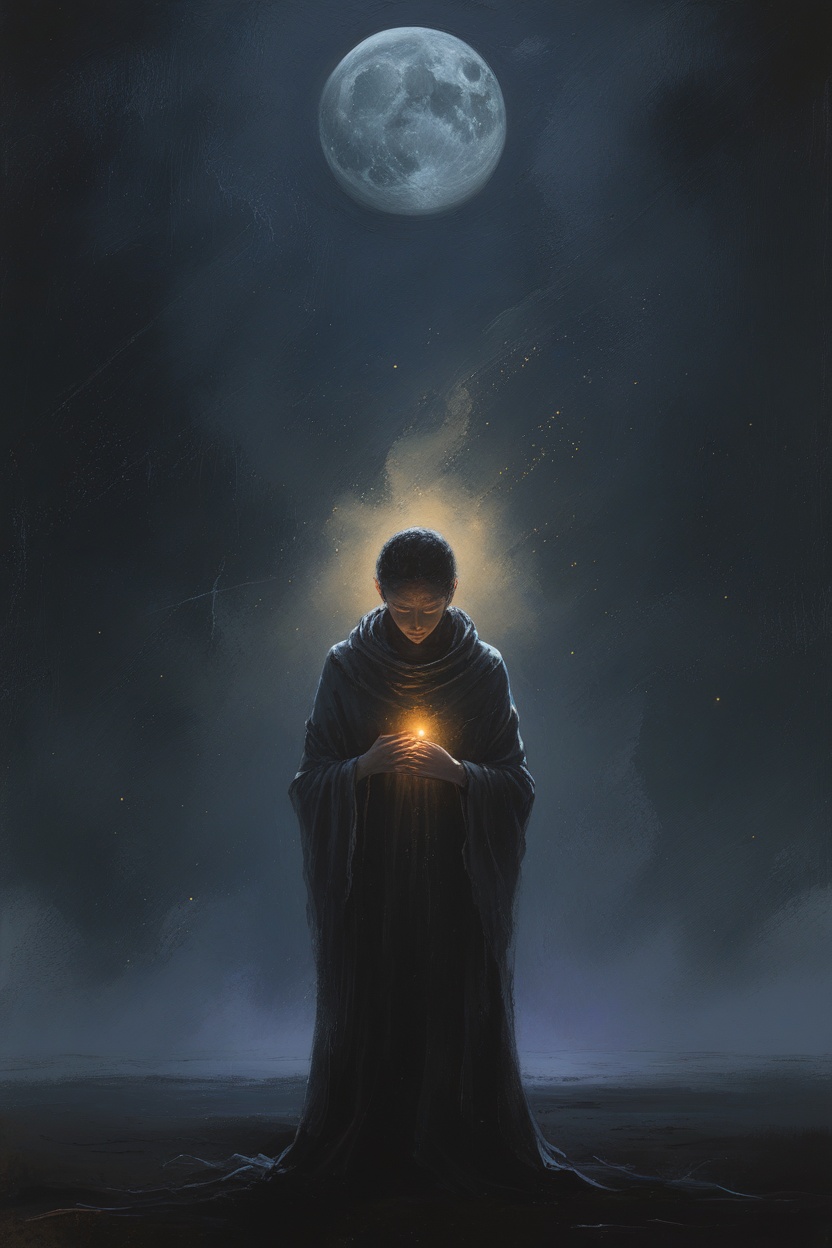
The dark night of the soul is an existential and spiritual crisis in which your previous faith, identity, and structures of meaning fall apart. It is not about having a bad week or feeling sad after a breakup. It affects your entire orientation to life, to reality, to whatever you call God or truth. The whole conceptual framework you relied on to navigate the world simply doesn't hold anymore-nothing makes sense anymore in the way it used to.
The term originates from the 16th-century mystic St. John of the Cross, but the experience appears across traditions: Christian, Sufi, Buddhist, and secular psychological language all describe versions of it. Contemporary writers like Thomas Moore and psychotherapists in transpersonal psychology have reinterpreted the dark night as a necessary phase of inner growth-a painful but purposeful dissolution.
Here is a quick summary of its core features:
- Nothing makes sense anymore
- A deep sense of meaninglessness or spiritual abandonment
- Loss of interest in previously sustaining beliefs, practices, or roles
- Deep sense of inner emptiness
- A feeling that your old self is dying, with nothing yet to replace it
- An inner state that persists regardless of external circumstances
- A hidden, sometimes barely perceptible pull toward something truer
The dark night is not casual suffering. It is the soul's reckoning with everything it has outgrown.
Classic Origins: St. John of the Cross and the First "Dark Night"
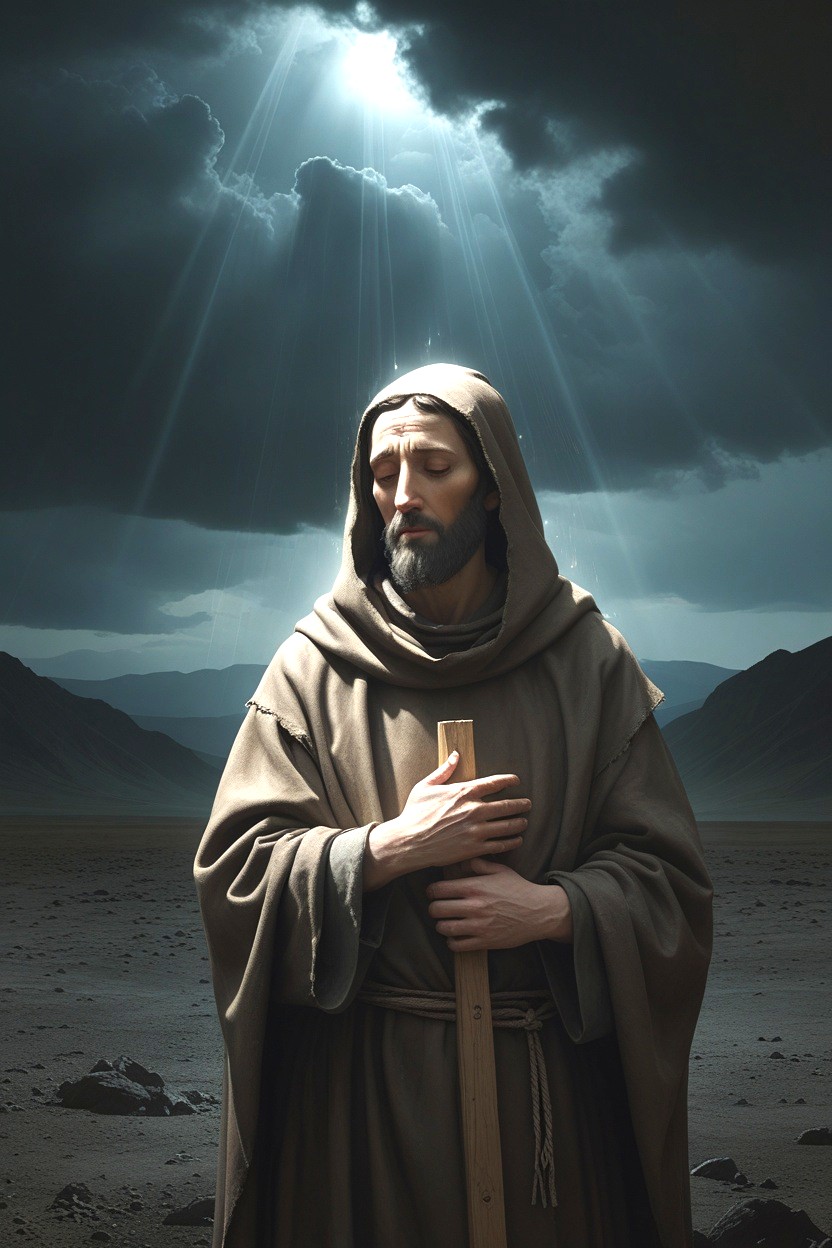
Saint John of the Cross (1542–1591) was a Spanish Carmelite friar who gave us the phrase that millions now use to describe their deepest struggles. His own dark night was anything but metaphorical.
In December 1577, John was imprisoned by fellow Carmelites in Toledo for his reform efforts. His cell measured roughly six by ten feet, with only a tiny slit of a window near the ceiling. For about nine months, he endured near-total darkness, minimal food, and regular physical abuse. During that confinement, he composed some of the most luminous poetry in the Spanish language-including the poem "The Dark Night," which became the foundation for his later prose commentaries.
John described two distinct phases of purification. The dark night of the senses strips away sensory and emotional consolations-the warm feelings, the easy certainties, all the things that once made faith feel good. The dark night of the spirit goes deeper, dismantling one's conceptual framework of God, self, and meaning itself.
For John, this wasn't punishment. It was a journey toward union with the Divine, a process in which the soul, emptied of its attachments, becomes free to receive something it couldn't have imagined before.
Contemporary Understanding of the Dark Night
Today, the dark night is no longer confined to monasteries. It has entered the vocabulary of therapy offices, meditation retreats, and recovery rooms. The language has shifted from "purification" to "spiritual emergency" or "spiritual crisis," but the structure remains the same: something inside you must die for something truer to be born.
Contemporary thinkers like Thomas Moore, Roberto Assagioli, and Joseph Campbell view the dark night as a phase of soul transformation-ego disintegration followed by potential union with a deeper Self. Transformation often follows the collapse of a perceived meaning in life. The awakening process, they argue, is inherently messy.
A dark night can also manifest without religious belief. It may appear as a collapse of career identity, worldview, or the secular gods of success and control. You don't need to believe in God to lose everything that once gave your life its perceived meaning.
Traditional Religious Framing
-God withdraws consolation to purify the soul
-Spiritual desolation leads to union with the Divine
-Surrender to God's hidden work
-Language: soul, grace, darkness, faith
Psychological / Secular Framing
-The ego structure dissolves to allow deeper integration
-Identity crisis leads to a more authentic self
-Acceptance of uncertainty and vulnerability
-Language: psyche, shadow, ego death, meaning crisis
Personal Experience
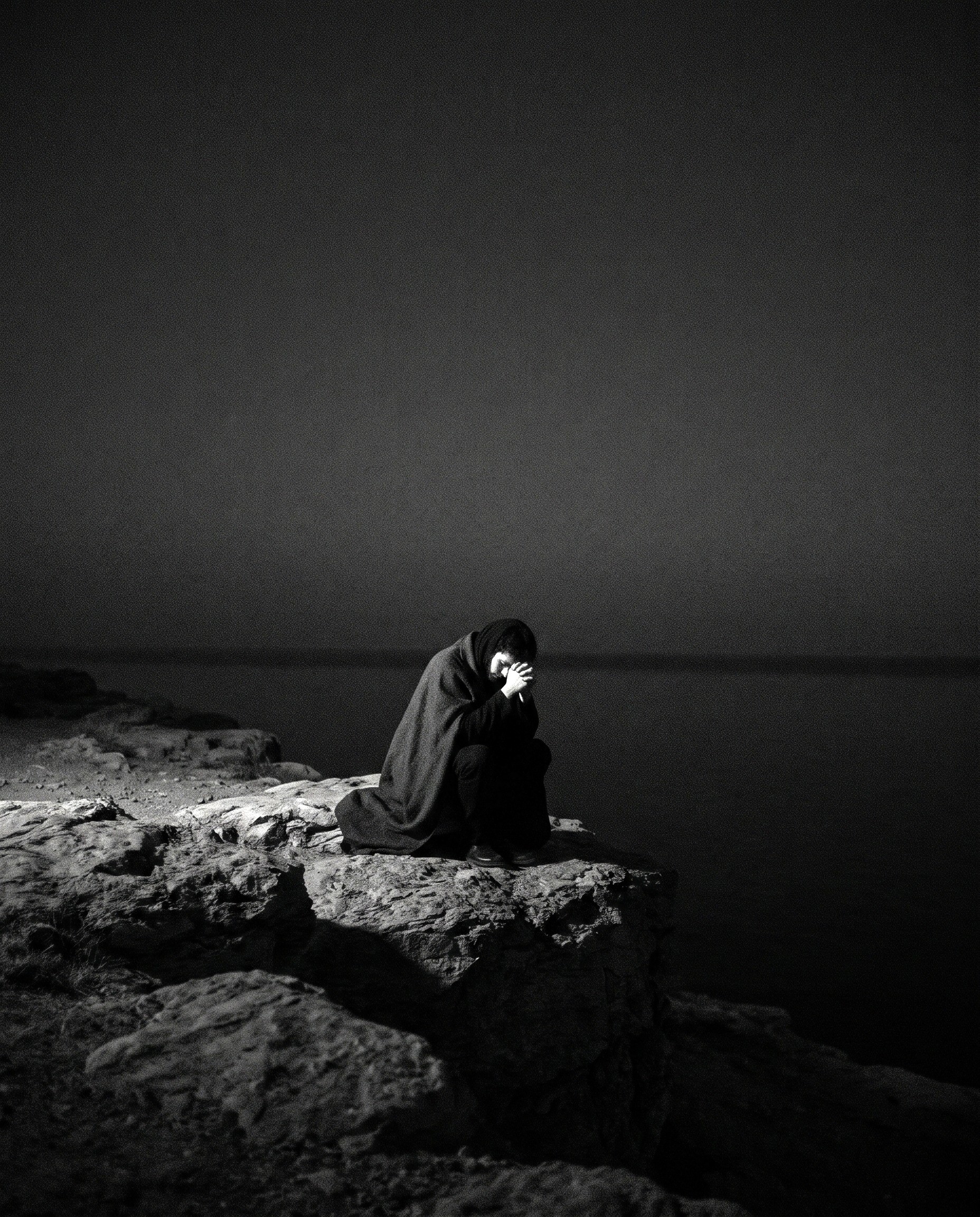
Throughout my life, I have faced profound and challenging moments often called the "darkest night of the soul." These experiences were not merely difficult; they were unbearable.
During these dark times, I often felt an intense and overwhelming sense of emptiness and uncertainty. It was as if I were adrift on an endless ocean, lost and directionless, unsure of what lay ahead or even if anything existed beyond my current state. I began to question my role as a spiritual medium, struggling to understand whether I was genuinely communicating with spirits of light and fulfilling my life's purpose.
This period marked a profound existential crisis, where nothing seemed meaningful, and the world around me felt devoid of purpose. My belief system was stripped away, leaving me with a sense of nothingness.
It wasn't that I no longer believed in the spirit world; rather, I questioned whether the spirits believed in me. Was I genuinely a medium or just a fraud pretending to be one? Was I serving God, or was I aligning myself with dark forces? Why did it feel like I was moving backward into darkness instead of forward into the light? These questions and others occupied my mind. I believed that if spirits were by my side, I should not be experiencing the darkness, emptiness, and massive confusion I was going through. Something felt off, and I couldn't identify the exact issue or resolve it.
It felt as if everything connected to my existence was slowly melting into nothingness. The only thing that remained intact was God's existence. I never doubted God's existence, but I questioned what God meant to me when everything else felt meaningless. Sometimes, I asked God if I was being punished or meant to learn a lesson. Although I felt my questions were lost in the wind. I never lost my faith in God- a God who I felt insisted on remaining silent.
This emotional turmoil I experienced often compelled me to withdraw into myself, seeking refuge in isolation. I found large crowds overwhelming. No words from others could ease the weight of my struggles. And many simply did not understand what I was going through. In one situation, I remember someone telling me to stop believing in spirits because it was driving me sick. The person then recited a verse from the Bible stating that one should not contact spirits, for there is much danger in doing so.
To many, it is difficult to understand the darkest night of the soul and the depths of the spiritual crisis the person goes through. If you haven't been through it, you will never understand what it truly feels like.
In time, I realized my isolation was not a curse; it was a necessary space to confront my inner turmoil.
During the dark night of the soul moments, when the weight of uncertainty and despair felt almost unbearable, I desperately prayed for guidance, but all I found was silence. I kept praying, yet nothing changed. It was as if the Universe had closed its doors, leaving me alone in the dark.
Though everything felt empty and meaningless, I held onto my faith and endured the emotional pain, emptiness, and confusion, wondering if it would ever end.
My faith isn't tied to a specific religion or doctrine; it stems from a deeply personal connection to God. Many would ask why I would continue to have faith in a God who has abandoned me. Little do they know that God doesn't abandon his children. It is we who abandon God.
Even if the physical body contemplated abandoning God, my soul would not allow it, for it is my soul that tells me that God is real.
God, in silence, guided me through the shadows and offered comfort when I was about to sink deep into a dark, forgotten abyss. In those moments of hopelessness, tears, and emptiness, I always felt God's divine presence pushing me forward and reminding me that I am never truly alone.
Knowing that I needed to face the process head-on rather than avoid it, I surrendered fully. I placed my body and soul in God's hands and sought His comfort and reassurance. I have always trusted God's infinite wisdom and guidance to help me navigate through challenging chapters of my life, even when everything felt chaotic and confusing. I placed my complete trust in His hands, fully aware that I may not always understand the path laid out before me, but I have an unwavering belief in His divine plan for me.
During moments of darkness, I would constantly see 111 or 1111 (spiritual numbers meaning spiritual awakening, manifestation alignment, new beginning, and the Universe letting you know you are on the right path).
Despite this comfort, I felt a deep sense that I had to go through these experiences alone- a solitary path, one that evokes vulnerability and introspection. In a way, it felt like a test—do I hold on, or do I let go?
Although my darkest nights of the soul have been profoundly intense and challenging, I have come to realize that these experiences serve a greater purpose beyond mere suffering. Instead of acting as a punishment, they play a crucial role in helping us shed old patterns and beliefs, clearing the way for new beginnings.
During these tough times, it's as if we are granted a new set of eyes and ears, allowing us to perceive the world more clearly and deeply. This transformation opens up a path to a richer reality—one where we can engage with life from a renewed perspective. Embracing these moments of despair ultimately leads to a revitalized sense of being, where we can uncover our true selves and fully experience the possibilities that lie ahead.
As a medium, I have experienced profound connections with the spirit world, allowing me to engage with spirits on a much deeper level than I ever imagined possible. This journey has not only strengthened my ability to communicate with spirits but also given me invaluable insights into spiritual matters.
Through prayer and reflection, I seek clarity and peace, embracing the journey ahead with an open heart, a person willing to learn and grow, and the strength to endure the challenges I face. I ask that God's will may unfold in my life according to His divine timing. Through this act of submission and reliance on faith, I hope to find a flicker of hope—a reassuring sign that light indeed waits for me beyond the veil of darkness. This journey of faith not only strengthens my spirit but also renews my hope for brighter days ahead.
This journey, though incredibly difficult and often fraught with uncertainty, has consistently paved the way for profound spiritual growth and renewal. Each painful experience has served as a stepping stone toward greater spiritual enlightenment. I have learned that these struggles, while daunting, ultimately contribute to my evolution.
As I reflect on my past, I recognize that each challenge has shaped me, deepening my resilience and understanding. Each time, I feel a renewed sense of hope and confidence, knowing that as I navigate turmoil, new opportunities will await me. I believe the dark night of the soul process leads to a richer understanding of myself, not only in my role as a medium but also as a human being. The process has helped me to embrace the lessons ahead and evolve into a more enlightened version of myself.
I understand that the darkest night of the soul is a transition from one state of being to another, where a new beginning will unfold—a new chapter in my life. This has always been the case; everything in life has a beginning and an end.
Although this journey is challenging and filled with uncertainty, it has consistently led to spiritual growth and renewal in the past. Each experience, no matter how emotionally painful, has paved the way for spiritual enlightenment. I remain hopeful and confident that once I emerge from the inner struggle, I will discover fresh opportunities and gain a deeper understanding of myself both as a medium and a human being.
Hold on to your faith in God, even during the hardest times. Sometimes you may feel God is silent or absent, and it can be hard to stay hopeful. Yet, it's important to remember that God is always there, watching over you and supporting you, even if you can't see or hear Him. Trust that He has your best interests at heart and will never let you down. Keep faith in His plans, for they are always good, and believe that, in time, you'll see the strength and guidance that come from unwavering faith.
Remember, God has your back and will never let you down.
Dark Night vs. Depression and Mental Illness
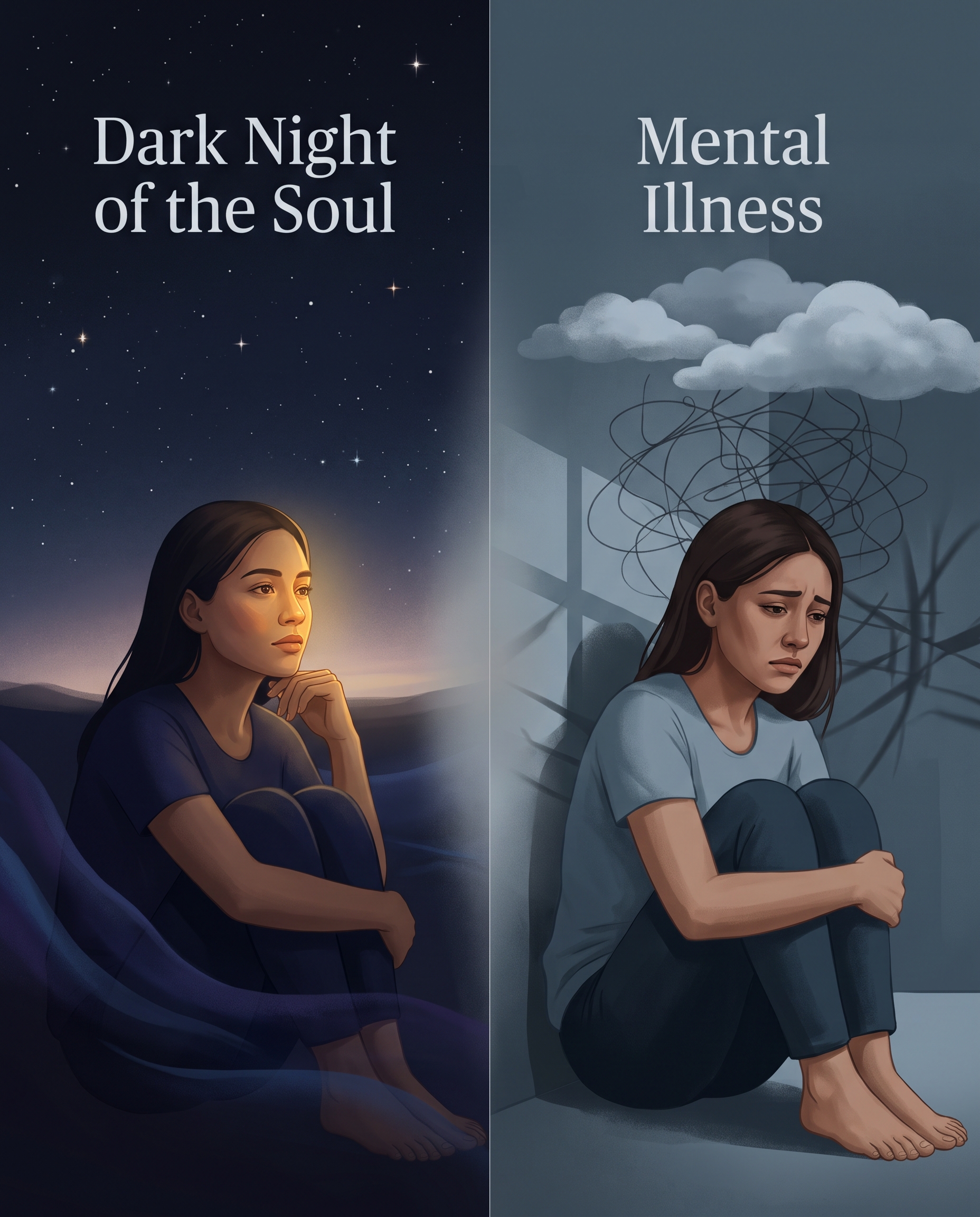
IMPORTANT DISCLAIMER: This article is not medical advice. If you are experiencing severe despair, suicidal thoughts, or an inability to function, please seek professional help immediately. Contact a crisis hotline, therapist, or physician, or go to your nearest hospital for help.
The experience can feel similar to depression or deep meaninglessness. Common experiences include emotional exhaustion, isolation, and loss of meaning. Overlapping symptoms include:
- Loss of pleasure in activities
- Exhaustion and disturbed sleep
- Hopelessness and intrusive negative thoughts
- Social withdrawal
Yet key differentiators exist. The dark night often contains:
- A subtle but persistent pull toward truth or meaning, even when meaning feels absent
- Occasional flashes of insight or peace amid suffering
- The capacity to continue functioning in daily life, relationships, or work
- A sense that the process, however painful, is somehow necessary
The experience is unlike clinical depression and may not require medical intervention in every case-but many people experience both simultaneously.
A spiritual crisis layered on clinical illness requires therapy, medical evaluation, and possibly spiritual guidance working together. When in doubt, seek professional help.
What Triggers a Dark Night of the Soul?
The dark night rarely arrives without a catalyst-though sometimes the trigger is internal rather than external.
Common triggers include:
- Loss and grief: bereavement, especially premature death of a loved one, divorce, or sudden death of a child-when a child dies, the entire architecture of meaning can collapse overnight
- Health crises: a serious diagnosis like cancer or chronic illness
- Career or financial collapse: job loss, bankruptcy, public failure
- Trauma: abuse, violence, betrayal by someone trusted
- Spiritual catalysts: intensive meditation retreats, psychedelic experiences, or religious conversion that destabilizes the old self
Midlife-often late 30s through 50s-is a common amplifier. Global crises like wars, pandemics, and climate anxiety can also push people who've been holding it together into a full spiritual crisis.
Signs You May Be in a Dark Night of the Soul
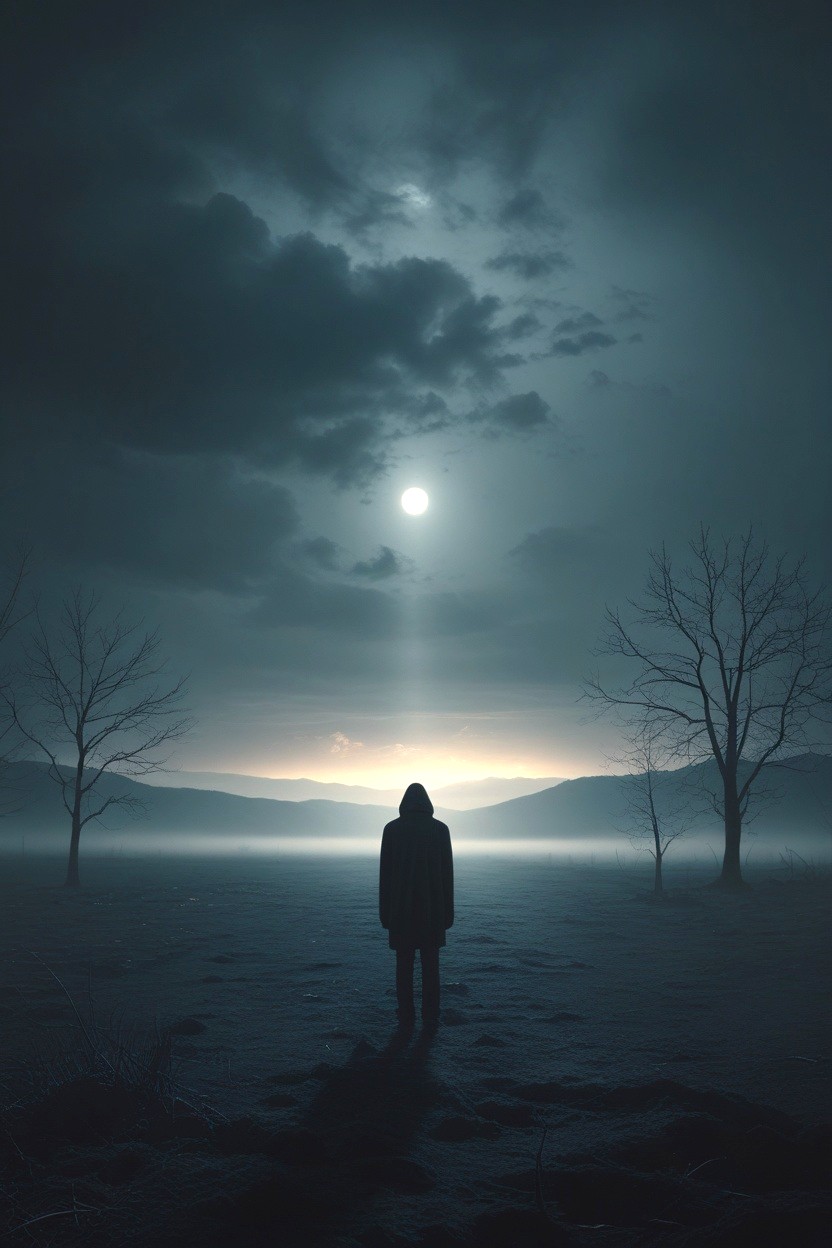
There is no universal checklist, but certain patterns recur across traditions and case studies. If several of these resonate, you may be in a dark night:
- Prayer, meditation, or spiritual practices feel empty, mechanical, or impossible
- Your old certainties-about God, purpose, self-have evaporated
- You feel stripped of inner images of who you thought you were
- A heightened awareness of death pervades your thinking
- All roles and achievements feel hollow and disconnected from who you really are
- You cannot "go back" to how things were, even if you desperately want to
- The experience brings hidden fears and unresolved trauma to the surface
- You feel lost in a way that no amount of advice or distraction resolves
The dark night often leads to the questioning of old beliefs and identity. Common experiences include emotional exhaustion, isolation, and loss of meaning. Recognizing these patterns can reduce shame and support seeking safe help from spiritual directors, therapists, or trusted friends.
The Ego's Collapse: Psychological Map of the Dark Night
The "ego" here is not vanity. It is the constructed self-image-the story that gives us continuity, control, and a sense of knowing who we are. It involves a painful deconstruction of identity and ego, and it is one of the most disorienting experiences human beings can undergo.
During a dark night, this ego narrative disintegrates. Success formulas stop working. Religious images lose their power. Your egoic sense of being a particular "somebody"-a parent, achiever, helper-feels brittle and hollow. What you took to be your authentic self turns out to have been only an illusory identity, a mask that no longer fits.
Facing your inner demons leads to integration and wholeness. In Jungian terms, you confront the shadow-repressed fears, wounds, and truths you hid from yourself. You encounter archetypes of limitation and depth that demand honesty rather than performance.
This collapse often precedes a wider, more inclusive identity-one that is less defended, more porous to others' suffering, and more aligned with what some call the true self or the soul.
Phases of ego dissolution:
- Disillusionment - the old story no longer convinces you
- Deconstruction - beliefs, roles, and images actively fall apart
- Limbo - you exist in conceptual meaninglessness, no longer interpreting reality through the old lens, not yet seeing through a new one
- Gradual reorientation - small, tentative movements toward authenticity and aliveness
Night of the Soul Across Traditions and Cultures
The dark night is not uniquely Christian. Similar experiences appear across world traditions:
- Christian mysticism: The "Cloud of Unknowing" describes a deliberate entry into the darkness of not-knowing as a way to encounter God beyond concepts
- Sufism: The concept of fana-annihilation of the self-teaches that the ego must die for the soul to unite with the Divine. Inayat Khan described this as the soul's willing dissolution
- Buddhism: Meditation traditions map stages including the "knowledge of fear and misery," where practitioners face intense aversion, dread, and disenchantment before breakthrough
- Shamanic traditions: Indigenous and mythic journeys require traveling through a literal or symbolic underworld, cave, or night before receiving new power. This is where the old ego dies in order to be reborn.
Even those without religious belief can frame their dark night in archetypal or mythic terms. The universe, it seems, does not require theological credentials to initiate you.
How Long Does the Dark Night Last?
There is no fixed timeline. Historical cases range from months to decades. In many contemporary accounts, a dark night of the soul can last 2-3 years, though some cases extend far longer.
Key points to remember:
- Variability is the norm: your dark night will not look exactly like anyone else's
- Ebb and flow: the darkness typically oscillates rather than remaining at constant intensity
- Signs of softening: small returns of hope, peace, or connection indicate movement
- Measure in seasons, not days: obsessing over "when will this end" is part of the old control structure
How to Walk Through the Dark Night Without Collapsing
Stabilize the basics:
- Protect your sleep
- Eat simple, nourishing food
- Move your body gently-walking, stretching, being in nature
- Maintain limited but consistent social contact
Make space for honesty:
- Pray, meditate, or journal in ways that welcome rage, doubt, and silence-not forced positivity
- Let your own thoughts exist without judging them as evidence of failure
- Practice being present to what is, rather than what you wish were true
Get human help:
- Trauma-informed therapy or counseling
- Spiritual direction from someone who understands both spiritual growth and psychological safety
- Grief groups, recovery communities, or a trusted mentor who can sit with ambiguity
When energy is at its lowest, very small commitments matter most. "I will get out of bed" is a victory on the hardest days.
Mistakes That Prolong the Dark Night
These are common pitfalls, not accusations. Name them gently so you can course- correct:
- Escapism: compulsive work, substances, entertainment, or constant distraction that delays necessary grieving and truth-telling
- Spiritual bypassing: pretending to be "above" pain, using spiritual language to avoid actually feeling what needs to be felt
- Rigid certainty: clinging to dogma-religious or atheistic-to avoid the vulnerability of not-knowing, which is central to the night's transformative power
- Self-pathologizing: interpreting every symptom as proof of personal failure rather than part of a larger process shared by many throughout history
- Isolation: withdrawing entirely from all human contact
Noticing these patterns is itself a step toward release. Course correction is always possible.
Surrender vs. Giving Up: The Inner Turning Point
Surrender is the pivot point where the dark night begins to shift. But surrender is not giving up.
Surrender means accepting reality and being willing to be led by something deeper than the frightened ego. It is not passivity or self-erasure. People awaken through surrender, not through force. It actually increases engagement with life-just without the old illusion of total control.
Giving up collapses into numbness, cynicism, or self-destruction. It abandons hope entirely. Surrender keeps hope alive, even when hope has no conceptual meaning it can point to.
Concrete practices of surrender:
- Silently naming "I don't know" and letting that be enough for now
- Breathing into bodily sensations instead of arguing with them in your mind
- Offering your suffering to God, the universe, or life itself-not as performance, but as honest release
- Asking for help, telling the truth, letting go of impossible standards
- Acceptance of the process is required for internal change during dark nights
As many people who've walked this path describe it: "I stopped fighting who I really was."
What Emerges After the Dark Night?
Change arrives subtly at first. You may not notice it until someone else points out that you seem different.
Common outcomes reported by mystics, therapists, and ordinary people:
- Deeper compassion: not sentimental niceness, but the ability to sit with another's pain without flinching
- Reduced fear of death: dying has already happened psychologically, and you survived
- A quieter but more stable faith: trust in life, truth, or God that no longer depends on constant consolation
- Less dependence on external approval: your own sense of worth becomes more internal
- More honest relationships: pretense becomes harder to maintain and less interesting
- A sense of non-separation: not constant ecstasy, but a stable background knowing that you belong to something larger
The dark night of the soul may lead to a deeper appreciation and authenticity. But emerging from the dark night does not guarantee permanent certainty or happiness. What it gives you is presence-the quiet courage to live honestly even when the world remains uncertain.
Serving the World After Your Night of the Soul
Authentic spiritual awakening naturally expresses itself in service-not grand heroics, but concrete, compassionate action born from having been broken open.
Embrace the darkness to find future service opportunities-your pain becomes the soil from which empathy grows.
Service can be:
- Mentoring someone else in crisis
- Volunteering in your community
- Creating art, writing, or music from your experience
- Simply becoming a more present friend, parent, or neighbor
- Using your mediumship to work with others with the assistance of spirits of light
Avoid making the dark night too personal; it connects to global suffering. Your journey through the night links you to the wider suffering of human beings everywhere-and that link is the foundation of compassion that doesn't burn out.
Service need not erase ongoing struggles. You can act meaningfully while still carrying scars. Personal healing and collective healing are inseparable dimensions of the same journey.
People Want to Know
After going through the Dark Night of the Soul, can it return?
Recurrence is common. Many people experience multiple dark nights throughout their lives, and later nights are often less disorienting because you carry memory, tools, and trust from previous ones
Is every hard period in life a "dark night of the soul"?
No. Ordinary grief, burnout, or situational sadness can be intense without dismantling your entire spiritual and existential framework. A dark night typically involves a radical loss of previous meaning, spiritual desolation, and a sense that the old self and worldview are dying-not just struggling. Don't obsess over labels. The priority is getting appropriate support-medical, psychological, spiritual-whatever the name.
Can someone have a dark night without believing in God?
Yes. Non-religious people may experience a dark night as a collapse of identity, worldview, or secular "gods" like success, status, and control. You can frame the process in terms of psyche, the unconscious, or life itself instead of God, while still honoring its depth. Many atheists, agnostics, and skeptics report journeys indistinguishable in structure from classic mystical dark nights. The soul, it seems, does not check your theology at the door.
Should I stop spiritual practices during a dark night?
Some practices may feel impossible, like intensive meditation, rigid fasting, or forced prayer. Gentler forms like silent sitting, honest lament, or contemplative walking can support integration. Adjust intensity rather than abandoning everything: shorter sessions, simpler prayers, practices that emphasize grounding in the body. Seek guidance from a wise spiritual mentor or professional therapist who understands both spiritual development and psychological safety.
How do I talk about my dark night with friends and family?
Choose a few trusted people and explain in everyday language: "I'm rethinking everything," "My old beliefs don't work anymore," "I'm in a dark place, and I need support." Ask specifically for the kind of help you need-listening without fixing, practical assistance, or simple companionship. Set boundaries with people who minimize, preach at, or pathologize your experience, while still seeking connection where it feels safe. You don't owe anyone a full theological explanation of what's happening inside you.
Click below and view more than 600 pieces of spiritual artwork

Spiritual Books
If you enjoy the articles on this website, you will also appreciate the short stories in the books below. Click here and continue the journey.